Children learn through experience before they can explain what they know. In childhood, play gives them a reason to test ideas, practise communication, and make choices. A tower of blocks, pretend shop, or puddle investigation can involve planning, language, movement, and persistence. These experiences matter because development grows through repeated, meaningful action, supported by responsive adults. Studying the developmental benefits helps us understand why play belongs at the centre of thoughtful early learning.
How Play Develops Thinking
During play, children build knowledge by handling materials, noticing changes, and independently adjusting their next attempt. A range of play based learning activities gives experiments a clear setting while leaving children room to make decisions and pursue questions. An educator can watch closely, then add a resource or question when play pauses naturally.
When children sort shells, build a ramp, or mix water with sand, they form ideas through action. They predict what will happen, observe the result, and change their approach. This cycle supports attention, memory, and reasoning because children connect choices with outcomes.
A child who tries several ways to fit a puzzle piece learns to persist when the first attempt fails. Open-ended materials, such as blocks or loose parts, invite experimentation because they have no single required result.
Language and Social Learning
Pretend play gives children a reason to name roles, describe plans, and negotiate what happens next. When a child runs a pretend café, they practise greetings, questions, and the language of buying and selling.
Shared play asks children to listen, take turns, and respond to other people’s ideas. Disagreements give them a practical chance to explain their view, hear another perspective, and agree on a way forward.
Emotional Growth and Agency
Choosing a game or material teaches children to make decisions and see them through. A child who decides to build a den can test structures, ask for help, and revise the plan without an adult taking over.
Play also lets children explore feelings at a manageable pace. In pretend scenarios, they can act out familiar events, such as welcoming a new baby or visiting a doctor, and practise responses with trusted adults nearby.
Movement and Sensory Exploration
Outdoor play that includes climbing, balancing, and running helps develop coordination and body awareness. Carrying buckets, pushing toy carts, or threading large beads also asks children to control movement with care.
Sensory experiences add information about texture, weight, sound, and change. When children pour water between containers or compare damp and dry sand, they practise observation while strengthening hand control.
The Adult’s Role in Learning
Play stays child-led when adults prepare accessible materials, allow uninterrupted time, and follow children’s interests. An educator can extend thinking with a question such as:
- What could make the bridge steadier?
The question invites reasoning without replacing the child’s own plan.
Observation makes adult support more relevant. Educators notice what a child repeats, avoids, or asks about before choosing a suitable next step. They could add measuring cups or introduce a new word. Brief notes also help families and educators see progress over time.
A Setting That Supports Meaningful Play
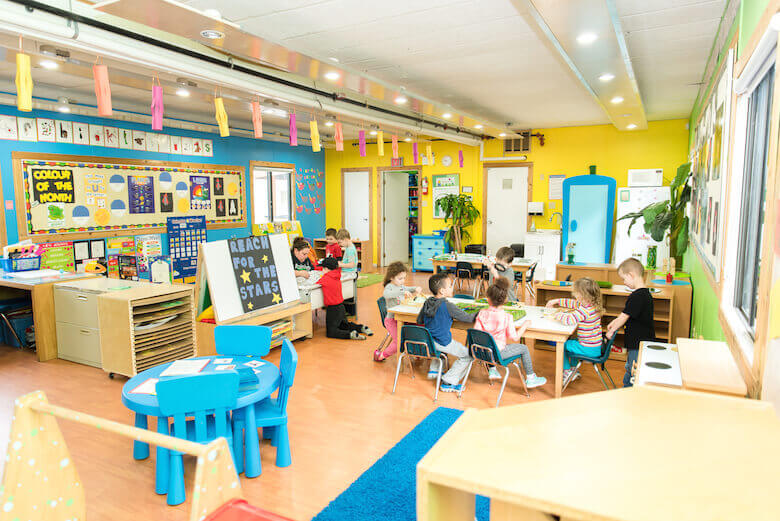
The room and daily routine shape how much children can explore. Clear spaces for construction, pretend play, and messy materials help children choose what interests them. Predictable access to resources lets them return to an idea and develop it.
Time matters because children need room to switch between elaborate games. A long, flexible play period lets children build a story, pause, then resume it without rushing to a new task.
Recognising Progress in Everyday Play
Progress appears in small changes: a child may stay with a shared game longer or use a new word during role play. They may return to a difficult task with less adult help. These details give adults evidence of developing skills.
Families may notice similar patterns at home during everyday routines by watching what captures attention and which challenges invite another attempt. Sharing those observations regularly with educators helps connect experiences across settings while preserving play as an enjoyable activity chosen by the child.
Conclusion
Families can support play by making time, space, and everyday materials available, then following the child’s interests. Educators can observe without interrupting and add a question or resource when it extends an idea.
At home or in care, the useful measure is what a child explores, communicates, and attempts independently. Regular conversations between families and educators help keep those experiences connected to each child’s development over time in practical ways.